

LCD 顯示器的常見問題與故障排除技巧
在工業控制、醫療設備、測試儀器、家用電器和消費性電子領域,液晶顯示器仍然是最常見的人機介面之一。無論是圖形矩陣屏還是單色液晶顯示屏,任何如無顯示、漏線、閃爍或對比度異常等問題都會影響整個設備的整體體驗和可靠性。
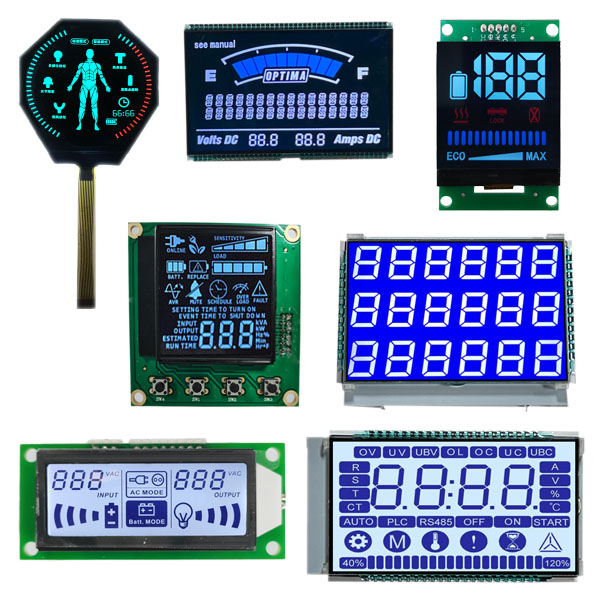
1、無顯示、黑屏、白屏。
A black screen is usually related to the power supply, backlight, and initialization; a white screen usually indicates that the backlight is on but the LCD has not been deflected or has not received valid image data. For an LCM module, first check VDD, VDDIO, VSS, reset pin and backlight power supply. If the backlight is not on, focus on checking the boost circuit, current-limiting resistor, LED string and connector.
2、漏行、漏字、斷線
Monochrome LCD displays are prone to missing lines. The possible causes include abnormal COM or SEG output, poor zebra strip connection, aging conductive adhesive, FPC short circuit, and damaged driver IC. For multi-channel driver screens, the bias resistor and duty cycle settings also need to be checked. If the missing line position is fixed, it is usually a problem with hardware connection or driver channel; if the position drifts, it may be due to timing, interference, or power ripple.
3.對比度不足或過度
Abnormal contrast does not necessarily indicate a screen failure. Factors such as VLCD, V0, bias voltage, and temperature compensation can all affect the display effect. It is common for the contrast of the液晶模組 to become less intense at low temperatures, and to become more intense at high temperatures. If it occurs in batches, check the initialization code of the driver IC, bias resistors, and temperature compensation circuits. If it occurs individually, check the welding and consistency of the liquid crystal panel.
4.波動、抖動、滾動
Fluctuation usually results from unstable frame rate, excessive power supply ripple, ground interference, conflict between PWM backlight frequency and refresh rate. If the FPC wiring of the LCM module is too long and not shielded, noise may also be introduced. First, use an oscilloscope to observe VDD and key signals, and then check the initialization registers. For monochrome LCD display, if there is overall screen jitter, focus on checking the COM waveform and backlight driver.
5.螢幕偽影、亂碼、顏色異常
Color LCD displays often have screen artifacts due to issues with data lines, clock lines, synchronization signals, and timing parameters. Check the FPC connections, connector oxidation, and soldering shorts. If 單色液晶顯示器有亂碼,檢查資料匯流排、RS/CS/WR控制線,確保初始化正確。
6.亮度不均、暗角、漏光
Backlight issues are common in side-entry LCM modules. Assembly deviations of the light guide plate, diffusion film, and reflective film, LED brightness attenuation, or inconsistent constant current drive can all cause uneven brightness. Light leakage is mostly related to structural bonding, shell deformation, and scratch on the polarizer. For 單色液晶顯示器,背光通常更簡單但導光板與液晶玻璃之間的間隙仍影響均勻性。
7. 缺陷、亮點、黑點、線條缺陷
Bad points are manufacturing defects in the LCD panel and usually cannot be repaired by software. Highlights refer to pixels that remain constantly lit, while dark spots refer to pixels that do not light up. Vertical or horizontal lines are often related to the driver IC, COG bonding, and FPC channels. If the line defect changes after pressing, it indicates poor connection. If there is no change after pressing, it may be that the driver IC or the glass wiring is damaged.
8. 陰影、重影、影像殘留
陰影是一種現象LCD 顯示器中的液晶分子 fail to fully recover after displaying a static image for a long time. Reducing the brightness of the static image, performing regular color inversion, and shortening the refresh cycle can alleviate this issue. If the driving voltage of the LCM module is asymmetric, it will also accelerate the appearance of shadows. Monochrome LCD displays are more prone to shadows when displaying fixed patterns. It is recommended to use alternate inversion or timed screen clearing.
上一个:觸控螢幕的工作原理是什麼?