

偏光鏡如何塑造您在每個螢幕上看到的內容?
偏光濾光片(又稱偏光光學元件)是一種選擇性地允許特定振動方向的光通過而吸收或反射其他方向的光的光學元件。這個過程將自然光轉變為偏振光。
Every LCD display, such as phone, laptop, and TV you use relies on a hidden layer you never notice: the polarizer. It sits inside the display and controls how light passes through. Without it, your screen would just be a blank glow. The type and brand of polarizer chosen can change brightness, viewing angles, and even how black looks.A polarizer is a thin film that filters light so only waves vibrating in one direction get through. In an LCD, two polarizers work as a team. The back one cleans up light from the backlight, and the front one acts like a gate. When the liquid crystal layer twists, it changes the light’s direction, letting pixels switch on and off. This is why polarizers are everywhere: not just in LCDs, but also in sunglasses that cut glare and in 3D glasses that separate left-eye and right-eye images.
Most display polarizers are made of a stretched polyvinyl alcohol (PVA) film dyed with iodine or special dyes. This film does the actual light-filtering work. It is then sandwiched between protective layers, usually triacetyl cellulose (TAC), to keep it stable and safe from moisture. There are also reflective polarizers that recycle wasted light to boost brightness, and compensation films added to widen viewing angles. For flexible or specialty screens, manufacturers may explore other materials, but the PVA-iodine combo remains the workhorse for the vast majority of LCD display.
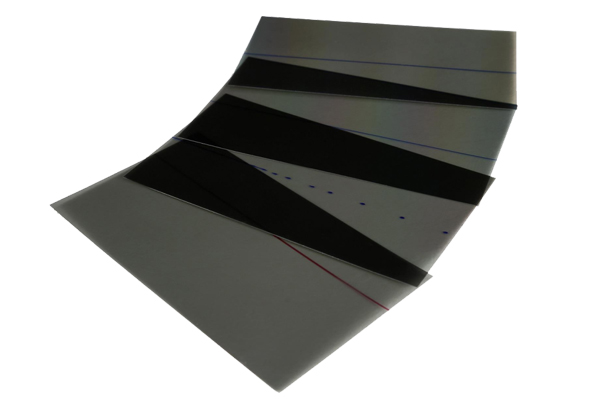
Not all polarizers perform the same, and big brands compete on exactly this. Japanese and Korean suppliers like Nitto Denko, Sumitomo Chemical, and LG Chem have long dominated the high-end market, known for consistent quality and advanced compensation films that keep colors accurate even when you look from the side. Chinese and Taiwanese makers such as Shanjin Optoelectronics and BenQ Materials have grown fast, offering solid performance at competitive prices. The practical difference shows up in small things: a cheaper polarizer might look fine head-on but wash out at an angle, or it might not block light perfectly in dark scenes, making blacks look grayish. A premium polarizer(POL) can make a mid-range screen look noticeably better simply by handling light more precisely.
For most people, the polarizer is invisible-until it isn't. If you've ever tilted a screen and watched the picture fade, or noticed a phone that looks great straight on but weak from the side, a polarizer is usually behind it. When shopping for a monitor or TV, viewing angle and black-level consistency are two quick ways to sense polarizer quality without reading a spec sheet. Brands rarely advertise which polarizer they use, but review sites and display tests often reveal the difference. For manufacturers, the choice is a trade-off between cost, durability, and optical performance, and that trade-off quietly shapes the final product more than most buyers realize.
因此,下次當顯示器看起來清晰舒適時,請記住偏光鏡為 LCD 顯示器做了很多安靜的工作。選擇合適的產品需要在預算、觀看需求和品牌在光學清晰度方面的記錄之間取得平衡。