

IPS 和 OLED 顯示技術的比較
In the fields of commercial display, consumer electronics, and industrial touch devices, LCD display, IPS display, and OLED display are currently the three display technologies with the highest market share. Many terminal manufacturers, purchasers, and technical researchers often struggle when choosing screen types, as they are often confused by the core differences between IPS display and OLED display. These two technologies rely on different light-emitting principles, hardware structures, and imaging logics, and exhibit significantly different performances in terms of picture quality parameters, service life, applicable scenarios, cost, and power consumption.
IPS顯示器的工作原理
IPS顯示幕是一種LCD顯示面板 based on the TFT architecture. Its core structure consists of a backlight layer, a liquid crystal layer, a color filter, and a polarizing layer. The panel itself does not have the ability to emit light on its own. It relies on the LED backlight module at the back to provide a constant light source. By controlling the left and right rotation of the liquid crystal molecules on the plane, the angle of light penetration is changed, and combined with the RGB color filter, the color image is restored.
Compared with traditional TN and VA type LCD displays, the biggest technological upgrade of IPS display is the arrangement of liquid crystal molecules. It completely solves the problems of perspective deviation and color distortion in traditional liquid crystal panels, achieving an ultra-wide viewing angle and stable color reproduction effect. It is also the mainstream preferred solution for industrial-grade LCD displays at present.
OLED顯示器的工作原理
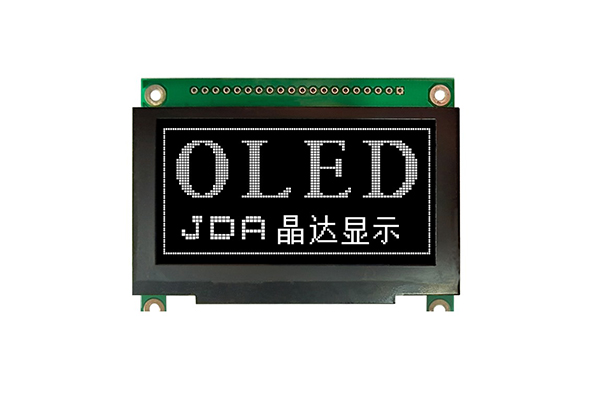
OLED display has abandoned the backlight module and liquid crystal layer structure of LCD display and belongs to an active emission display technology. The panel is composed of countless independent RGB organic light-emitting pixels, and each sub-pixel can be independently powered on to emit light and powered off to extinguish. It does not rely on external light sources. By adjusting the power of different pixels, the brightness and color can be precisely controlled. The structure is more streamlined and the response speed is faster. Due to its self-emission characteristic, OLED display can achieve pixel-level light control, which is the core reason why its contrast and black level performance far exceed all LCD display panels. However, it also brings inherent technical shortcomings such as organic material aging and screen burn-in.
OLED產品主要包括PMOLED(被動矩陣OLED)和AMOLED(主動矩陣OLED)。
PMOLED:通常適用於結構相對簡單的小尺寸顯示器應用,例如智慧家庭設備、儀器儀表、便攜式電子產品以及一些醫療設備。
AMOLED:採用主動矩陣像素驅動,適用於需要高解析度、動態畫面效能和精確像素控制的產品,如智慧型手機、智慧穿戴裝置和一些高階工業終端。
IPS和OLED如何選擇?
IPS顯示幕首選場景
凡是需要長期運作、靜態顯示、暴露在室外強光以及惡劣工業環境的設備均建議使用IPS顯示器(高階液晶顯示器)。其中包括工業觸控螢幕、車載工業螢幕、戶外廣告機、安防監控顯示器、辦公室商用大螢幕、醫療設備顯示器、智慧家庭控制面板等,這些場景對螢幕穩定性、使用壽命、抗干擾能力的要求極高。IPS顯示幕的優點,無燒屏、亮度穩定、環境適應能力強等特性都可以充分利用。同時具有較高的性價比,適合大規模大量生產。
OLED顯示首選場景
注重高端畫質、輕薄外觀、視聽娛樂等的消費性電子產品高速動態影像推薦使用OLED顯示屏. This includes flagship smartphones, high-end gaming monitors, home audio-visual TVs, foldable devices, high-end wearable displays, etc. In these scenarios, attention is paid to visual experience and product appearance quality. The extreme contrast ratio, ultra-wide color gamut, ultra-fast response, and lightweight flexible characteristics of OLED display can significantly enhance the high-end attributes and user experience of the products.
關於晶達顯示
Jingda Display specializes in LCD, TFT and OLED display modules. It can assess the applicable display technologies and product specifications based on project requirements. Whether the project needs IPS TFT 彩色顯示屏、OLED模組,或字元、圖形點陣和二進位碼液晶顯示器,明確的技術要求和充分的樣品驗證是實現穩定量產的重要基礎。