

液晶顯示器中的點陣螢幕和段碼液晶螢幕有什麼差別?
點陣屏和段式液晶螢幕, as two basic and widely used sub categories, support the display needs of multiple fields such as consumer electronics, industrial control, and medical instruments with their unique technical characteristics and cost advantages. Although both belong to the LCD technology system, there are significant differences in display principles, functional characteristics, and application scenarios. Accurately distinguishing the differences between the two is of great significance for terminal manufacturers' selection and industrial technology layout.
什麼是段碼液晶顯示器?
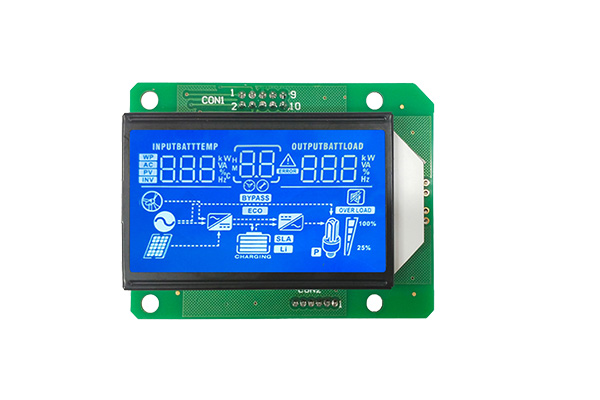
A segment LCD display uses pre-designed fixed patterns--called segments--to display numbers, letters, symbols, or custom icons. Each segment corresponds to an independent electrode. When voltage is applied, the liquid crystal molecules in that specific area twist, making the segment visible. The most common configurations include 7-segment displays (optimized for numeric display), 14-segment displays (full alphanumeric support), 16-segment displays (enhanced character definition), and fully custom segment layouts tailored for specific applications
什麼是圖形液晶顯示器?
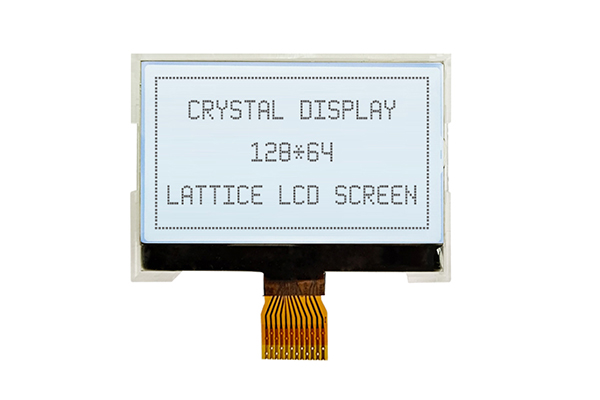
A dot matrix LCD display (also known as a graphic LCD display) consists of a grid of individual pixels arranged in rows and columns. Each pixel can be independently controlled, allowing the display to generate arbitrary graphics, characters, and even images. Common resolutions include 128×64, 192×64, 128×128, 240×128, and 240x48 pixels.
The segment LCD screen, with its advantages of low cost and low power consumption, is widely used in scenarios that do not require complex displays. It covers the fields of consumer electronics and industry, such as calculators, electronic scales, air conditioner panels, basic electronic watches, thermostats, charging station display screens, etc. In these scenarios, only simple numbers, symbols or status prompts need to be displayed. The cost-effectiveness and stability of the LCD display screen can be fully utilized. According to industry observations, the market penetration rate of LCD screens in small-sized and simple display scenarios exceeds 60%, making it the preferred choice for low-cost display solutions.
圖形液晶螢幕 are more suitable for scenarios where flexibility in display content is required. They are mainly used in human-machine interfaces (HMI) of industrial control equipment, display of medical instruments, portable measuring instruments (oscilloscopes, multi-meters, etc.), POS machines, old-fashioned mobile phones, MP3 players, etc. These scenarios require displaying complex menus, graphics, Chinese characters or custom icons. The flexible display capability of monochrome LCD graphic LCD screens can meet diverse needs. With the advancement of industrial automation and miniaturization of medical equipment, the demand for graphic LCD screens is gradually increasing. Especially high-resolution and wide-temperature dot matrix screens are seeing a continuous expansion in their application in high-end industrial and medical scenarios.
The graphic matrix screen and the segment LCD display are not in a competitive relationship. Instead, based on their respective technical characteristics and cost advantages, they have formed a complementary market pattern. The segment screen takes "simplicity, low cost, and low power consumption" as its foundation for simple display scenarios, while the graphic LCD screen adopts "flexibility, multi-functionality, and customizability" to meet complex display requirements. Together, they support the diversified development of the LCD field. For end manufacturers, clarifying their product's display requirements, cost budget, and application scenarios is the core basis for choosing between the graphic LCD screen and the monochrome segment LCD screen.