
柔性 OLED 顯示器如何改變生活?
If you look around your home or office right now, you will probably see a few flat, rigid screens. Your TV is a rectangle. Your computer monitor is a rectangle. Even your phone, though sleek, is still a hard piece of glass. The next big thing in display technology is not about sharper colour or higher brightness, though those are getting better too. The next big thing is about bending, folding, and rolling. That is starting to change faster than most people realize.
靈活的OLED顯示器are no longer science fiction. They are here, and they are quietly appearing in daily devices. From smartphones that fold into small squares to large screens that roll up like posters, this new technology is giving product designers a freedom they have never had before. And for ordinary users, it means we can finally carry big screens in small pockets.
什麼是柔性OLED?
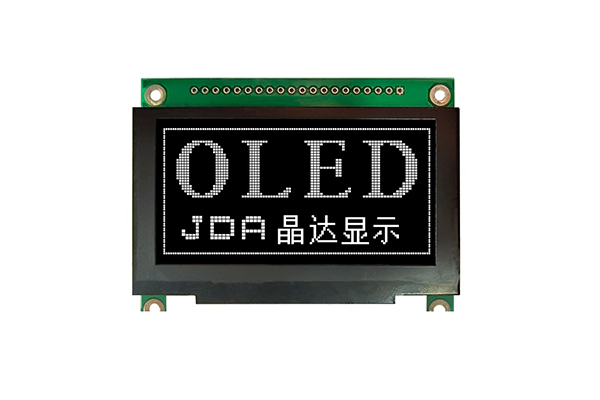
First, let us keep the technology simple. OLED stands for Organic Light-Emitting Diode. In plain English, it means each tiny dot on the screen makes its own light. That is different from older LCD screens, which need a backlight behind them. Because OLED pixels are self-lit, they can turn completely off to show true black, which makes the picture look much more vivid. Now, add “flexible” to that. Traditional screens are built on glass, which is hard and breaks easily. Flexible OLED use plastic or thin metal layers instead of glass. This allows the screen to be curved, bent, or even folded without breaking. The pixels themselves are so thin and tiny that they can be printed on materials that bend like paper.
今天我們在哪裡可以找到它們?
Let us start with the most obvious example: fold smartphones. In the past few years, several brands have released phones that open up like a book. In their normal state, they are about the size of a small notebook. But unfold them, and you get a tablet-size screen big enough for watching movies, reading documents, or playing games. This means people no longer have to choose between a phone that fits in their pocket and a screen that is comfortable to read. They can have both.
Another growing area is wearable devices. Smartwatches with flexible screens can wrap slightly around your wrist, making them more comfortable and showing more information at a glance. Some fitness bands now have curved displays that follow the shape of your arm, so they do not stick out awkwardly.
In the home, designers are experimenting with roll TVs. Imagine a large television that can roll down from the ceiling or hide inside a piece of furniture when you are not watching it. This is already possible with flexible OLED panels. You press a button, and the screen quietly rolls up into a slim box. When you want to watch a movie, it comes down smoothly. This idea is especially popular in small apartments where space is precious.
Even in cars, flexible screens are starting to appear. Instead of a separate display in the middle of the dashboard, car makers can now create a wide, curved screen that flows from the driver’s side to the passenger’s side. This not only looks modern but also places important information right where the driver can see it without turning their head too far.
超越小工具:創意與公共用途
靈活的 OLE are not just for personal electronics. They are also being used in art, advertising, and architecture. In some shopping malls, you can see giant curved video walls that wrap around pillars or flow along the ceiling. These displays create a much more immersive experience than flat screens. In museums, curved screens can show historical scenes in a way that makes visitors feel like they are inside the painting. Another surprising use is in lighting. Because OLED panels emit soft, even light without harsh shadows, some interior designers use them as decorative wall panels that can change colour or show moving patterns. At night, a flexible OLED panel on your wall could show a calm ocean wave or a starry sky, helping you relax before sleep.
耐用性怎麼樣?
Many people worry that a bendable screen might break easily. The truth is, these screens are tested to fold hundreds of thousands of times in factories. That is more than most users will ever fold them in several years. The weak point is usually the hinge or the folding mechanism, not the screen itself. As long as you keep sharp objects away and do not fold them with extreme force, they are quite robust for daily life.
您可能意想不到的日常好處
One major advantage of flexible OLED is energy efficiency. Because each pixel lights up by itself, the screen consumes power only where it is needed. If you are reading a book in dark mode, for example, most pixels are completely off, so the battery lasts much longer. This is especially helpful for portable devices.
Also, these screens are thinner and lighter than traditional ones. A foldabl phone is not much heavier than a regular phone, even though it has a much bigger screen. This weight reduction matters a lot when you carry devices all day.
Another less obvious benefit is reduced glare. Many curved screens are designed to match the natural curve of human vision, so reflections from windows or lights are less distracting. This makes them easier on the eyes during long hours of work or entertainment.
Will flexible displays replace all traditional screens? Probably not entirely, at least not anytime soon. For very large TVs, flat screens are still cheaper and simpler to manufacture. For professional monitors that need exact colour, rigid OLED or high-end LCD are still preferred. Flexible displays are best when portability or unusual shapes are important. So we will likely see both types coexist for many years.
挑戰依然存在
Of course, no technology is perfect. Flexible OLED are still more expensive than regular screens. The manufacturing process is complex, and the materials are not cheap. That is why fold phones cost significantly more than standard models. But prices have dropped every year, and as more companies enter the market, we can expect them to become much more affordable.
There is also the question of repair. If a flexible screen gets scratched or damaged, replacing it is not as easy as swapping a normal screen. Repair shops need special tools and training. This is something manufacturers are working on, but for now, users should be careful with their bendable devices.
Software is another challenge. Apps and operating systems need to adapt smoothly when a screen changes shape. For instance, when you unfold a phone, the app should instantly resize without glitches. Most major apps have now updated to handle this, but smaller developers are still catching up.
未來會怎樣
Looking ahead, the possibilities are exciting. Researchers are already testing screens that can stretch like rubber, not just bend. These could be used in clothing that changes colour or shows messages. Imagine a jacket with a flexible display on the sleeve that shows your fitness data or an image you like. Or think about a smart bag that can display your flight information on the side.
Another future use is in medical devices. Flexible sensors and displays could be placed on the skin to monitor health signs and show the results instantly without needing a separate screen. This would be very helpful for elderly people or patients who need continuous care. We are also likely to see more roll laptops and monitors. Instead of carrying a heavy 15-inch laptop, you could carry a small cylinder that unrolls into a full-size screen. This would be a dream for business traveller.
柔性 OLED 螢幕對兒童和老年人安全嗎?
Yes, they are generally safe. They use the same low-energy light as regular OLED screens, so they do not emit harmful radiation. However, like any screen, staring at them for too long can cause eye strain. It is a good idea to take breaks every 20 minutes. Also, because these screens are thinner, they may be more fragile if dropped, so a protective case is recommended for younger users.
柔性 OLED 顯示器破損後可以回收嗎?
Recycling is a bit complicated right now. The materials include plastics, metals, and organic compounds that need to be separated properly. Some manufacturers have started take-back programs where they collect old devices and extract useful materials. But the process is not yet as widespread as recycling glass screens. The good news is that as the technology becomes more common, recycling methods are improving quickly. It is best to check with the manufacturer of your device for recycling guidance.
In Summary, flexible OLED displays have moved from research labs to our pockets, wrists, and living rooms. They give us bigger screens without bigger devices, more creative designs, and new ways to interact with information. The technology is not perfect—it costs more and needs careful handling—but it is improving fast. Within the next few years, bendable screens will likely become as common as touchscreens are today. And that future looks bright, colourful, and delightfully flexible.
關於晶達顯示公司
深圳市精達顯示技術有限公司有限公司,(JDA in brief) is established in 2015, with a team of 10 experienced engineers in the LCD display industry. Through our continue innovations, it has developed into a high-tech enterprise integrating R&D, manufactures and sells display modules and HMI solution. JDA is committed to the perfect integration of intelligent technology and display technology, our company focused on the field of LCD display, and is committing to providing clients with high cost-effective LCD display product and display application solution. The main products include small and medium size monochrome LCD display and LCM, 0.96-25 inch TFT&OLED LCM HMI solutions, and touch screen, control panel, backlight, etc. With more than 10 years development, JDA has rich experiences in LCD display field, meanwhile it has own R&D team and factory, and has certain advantages in product quality and innovation ability. We aim to be at the forefront of the LCD display technology industry, offering innovative and reliable products that meet the ever-evolving needs of the marke