

哪些因素影響單色液晶顯示器的耗電量?
單色液晶螢幕 have long been the backbone of low-power electronic devices across industrial, commercial, and consumer sectors. For the TFT color LCD panels that require complex color filtering and high-power back-lighting systems, monochrome liquid crystal displays deliver simple, high-contrast visual output with minimal energy overhead. Their exceptional power efficiency makes them the preferred choice for battery-operated devices, including industrial meters, wearable gadgets, smart home sensors, medical portable equipment and so on.
單色 LCD 顯示器仍然是當今最節能的顯示技術之一。在電池壽命和功耗預算主導產品設計決策的時代,準確了解驅動這些顯示器功耗的因素不僅僅是一項學術練習,而是關係到便攜式設備成敗的關鍵工程考慮因素。
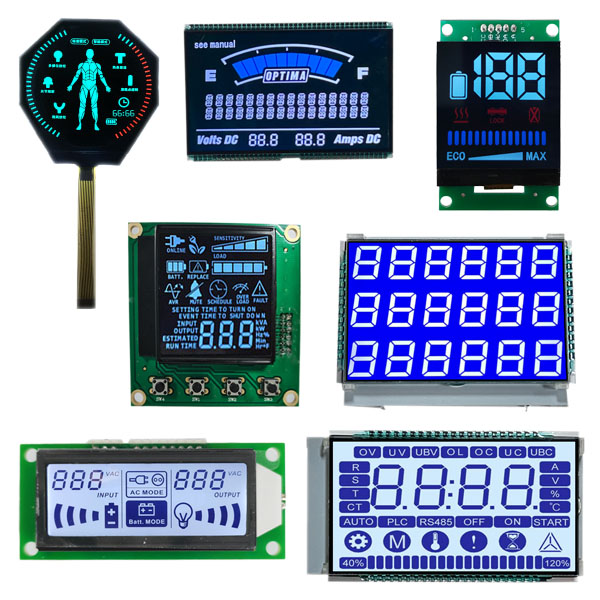
1. LCD面板結構設計規範
The inherent structural design of a monochrome LCD panel is the foundational determinant of its baseline power consumption. Every core component of the panel, from physical dimensions to display mode and matrix type, directly shapes its energy usage characteristics. Even with identical driving circuits and operating environments, structurally different monochrome LCD modules can exhibit power consumption gaps of several times.
1.1 螢幕尺寸和像素密度
Screen size is one of the most intuitive factors affecting monochrome LCD power draw. In standard monochrome LCD products, power consumption is positively correlated with the effective display area. Larger panels require more liquid crystal pixels, more transparent electrode wiring, and wider signal coverage areas, all of which increase basic capacitive load and static power loss. For segment-type monochrome LCD display widely used in timers and meters, small-sized panels under 2 inches typically consume only 1–5mW of active power, while medium-sized 3–5 inch graphic monochrome LCD display usually draw 10–30mW under normal working conditions.
Pixel density also plays a vital role in power regulation. High-resolution monochrome LCD display such as 128×64, 240×128, and 320×160 models feature denser pixel arrays and more intricate driving circuits. Each pixel unit requires independent signal scanning and voltage control, raising the overall circuit load and dynamic power consumption. In contrast, low-resolution segment LCDs with fixed display patterns have simpler circuit structures and far lower power loss, making them ideal for ultra-low-power standby scenarios.
1.2 顯示光學模式
單色 LCD 螢幕分為三種核心光學模式:反射式、透射式和透反式,每種模式的功耗曲線截然不同。這種分類是不同單色顯示模組之間功率差距巨大的主要原因。
1.3 矩陣驅動類型
Monochrome LCD displays are divided into passive matrix (PM) and active matrix (AM) types, with passive matrix being the mainstream for low-power monochrome products. Passive matrix LCD display feature a simple cross-grid electrode structure, sharing row and column electrodes for pixel scanning. They only consume power during pixel state switching and maintain display content with minimal static power, which is the core reason for their low-power advantages.
2. 背光系統配置
For most transmissive and transflective monochrome LCD display modules, the backlight system accounts for 70%–90% of the total power consumption. Unlike color LCD displays with high-power RGB backlights, monochrome LCDs mainly use monochromatic LED backlights, but differences in backlight quantity, brightness, color temperature, and driving mode directly determine the module’s overall energy consumption. Optimizing backlight configuration is the most effective way to reduce monochrome LCD power loss.
2.1 背光LED數量及佈局
The number of built-in backlight LEDs is linearly related to power consumption. Small-sized monochrome LCD screen usually adopt 1–2 LED backlight designs with low working current and low power. Large-size or high-uniformity display modules require 4–6 or even more LED beads to eliminate dark corners and ensure full-screen uniform brightness. Each additional LED bead increases the overall operating current of the backlight system, directly raising total power consumption.
Backlight layout also affects power efficiency. Side-mounted backlight designs commonly used in thin monochrome LCD display module conduct light through light guide plates, with low light loss and relatively low power consumption. Bottom direct-lit backlight layouts have higher light utilization efficiency but require more LED beads, resulting in higher power draw under the same brightness standard.
2.2 背光亮度調節
Backlight brightness is the most flexible adjustable factor for monochrome LCD power consumption. LED backlight brightness is controlled by driving current—higher current corresponds to higher brightness and higher power consumption. Most monochrome LCD modules support PWM (Pulse Width Modulation) dimming or analog voltage dimming. Under maximum brightness, the backlight works at rated current with peak power consumption; under low-brightness standby mode, the driving current drops sharply, reducing backlight power loss by 60%–80%.
Most industrial and consumer electronic devices do not need maximum screen brightness in daily operation. Appropriately reducing backlight brightness on the premise of ensuring readability can greatly extend device battery life. For ultra-low-power standby scenarios, configuring automatic backlight shutdown logic when the screen is static can further eliminate invalid power loss.
2.3 背光工作模式
Constantly on backlight mode leads to continuous high power consumption, while intermittent and trigger-based backlight modes effectively save energy. Many smart devices adopt human body induction, key trigger, or light sensor linkage backlight strategies: the backlight remains off during standby and only lights up when user operation is detected, drastically reducing long-term static power loss. For battery-powered portable devices, this working mode optimization has a more significant power-saving effect than hardware parameter adjustment.
三、驅動電路及晶片參數
The driving chip and peripheral circuit system are the core control units of monochrome LCD operation. Different chip models, driving voltages, refresh frequencies, and circuit design schemes directly affect dynamic and static power consumption during display operation. Even with the same LCD panel, mismatched driving parameters will cause obvious power waste.
3.1 驅動晶片型號及功耗
Specialized monochrome LCD driver chips have distinct power consumption characteristics. Low-power dedicated display chips adopt optimized circuit architecture, supporting low-voltage driving and sleep mode, with ultra-low standby current of only a few microamps. In contrast, universal MCU alternative driving schemes lack targeted power optimization, with higher static power loss and dynamic scanning power consumption.
3.2 工作電壓和偏壓
Monochrome LCDs have strict operating voltage ranges. Within the rated voltage interval, appropriately reducing the driving voltage can lower pixel excitation power loss without affecting display clarity. Excessively high driving voltage will not only increase power consumption but also cause liquid crystal molecular fatigue, accelerating screen aging and leading to display flickering.
Bias voltage is another key parameter affecting power stability. Reasonable bias voltage configuration ensures stable liquid crystal molecular rotation with minimal current drive. Unreasonable bias voltage settings will cause repeated molecular vibration and invalid current loss, increasing unnecessary power consumption while reducing display contrast.
3.3 螢幕更新率
Refresh rate determines the pixel scanning frequency of monochrome LCDs. Higher refresh rates mean more frequent circuit scanning and signal switching, leading to higher dynamic power consumption. Unlike color screens that require high refresh rates to eliminate strobing and smear, monochrome LCD display screen feature simple display content and low visual sensitivity to strobing.
3.4 復用驅動模式
Monochrome LCD display commonly use multiplexing driving technology to simplify circuit wiring. Different multiplexing ratios (1/4 duty, 1/8 duty, 1/16 duty) affect power consumption and display quality. A higher multiplexing ratio means more pixels share scanning circuits, reducing peripheral circuit quantity and static power loss. However, an excessively high multiplexing ratio will increase single-point scanning load, raising dynamic instantaneous power consumption. Reasonable matching of multiplexing parameters according to screen resolution is key to balancing power consumption and display stability.
4.顯示內容及工作狀態
許多從業人員忽略了單色液晶螢幕功耗隨即時顯示內容和工作狀態的變化而變化。點亮像素數、螢幕更新頻率和待機狀態都會產生不同的功耗效果,這些都是細粒度功耗最佳化的關鍵細節。
4.1 像素光照比
Monochrome LCDs consume power when driving liquid crystal pixels to flip and display content. The more pixels are lit on the screen, the higher the overall circuit load and dynamic power consumption. A full-screen solid display state has the highest power draw, while a blank screen or low-pixel display state has the lowest power consumption.
4.2 螢幕更新頻率
Each screen refresh and content update requires signal scanning and pixel state switching, accompanied by instantaneous power loss. For devices with static display content such as instrument parameter screens and timing displays, frequent unnecessary updates will continuously generate invalid power consumption. Setting reasonable update cycles according to data change frequency—for example, updating every 1–5 seconds for slowly changing parameters instead of real-time refresh—can effectively reduce average power consumption.
4.3 工作與待機模式切換
Monochrome LCD modules have obvious power differences between working mode, light-on standby mode, and deep sleep mode. In normal working mode, the screen refreshes continuously with maximum power consumption; in standby mode, the screen keeps static content with the backlight off, retaining only chip static power loss; in deep sleep mode, the driver chip stops most circuit operations, with power consumption dropping to the lowest microampere level.
5. 環境操作條件
操作環境改變液晶材料和電路元件的物理特性,間接影響單色液晶顯示器的功耗。溫度、濕度和環境光強度都會調節顯示模組的工作狀態和功耗,這在工業和戶外設備設計中是不可忽視的。
5.1 工作溫度
Temperature is the most influential environmental factor for monochrome LCD power consumption. Liquid crystal material viscosity changes with temperature: low temperatures increase liquid crystal viscosity, slowing molecular rotation and requiring higher driving voltage and longer scanning time to ensure normal display, which raises power consumption. High temperatures reduce liquid crystal viscosity, lowering driving voltage requirements and relatively reducing power loss, but excessively high temperatures will accelerate component aging and cause circuit leakage current to rise.
Industrial-grade monochrome LCDs usually adapt to -20℃ to +70℃ wide temperature ranges. In low-temperature outdoor environments, many modules need to activate temperature compensation circuits to maintain display stability, which brings additional power consumption. For devices working in extreme temperature scenarios, low-temperature power consumption margin must be reserved in power design.
結論
The power consumption of monochrome LCD screens is a systematic result of the interaction between structural design, backlight configuration, driving parameters, working state, environmental conditions, and hardware aging. Unlike the fixed power parameter cognition in traditional perception, monochrome LCD power draw has strong adjust ability and scenario dependence. For electronic product designers and maintenance engineers, clarifying all influencing factors is not only conducive to selecting matching display modules and reducing hardware costs but also can maximize battery life and device stability through refined power optimization.
在低功耗物聯網設備、工控設備、便攜式醫療電子場景中,合理控制單色液晶螢幕功耗可大幅提高產品市場競爭力和使用者體驗。隨著低功耗顯示技術的不斷升級,最佳化的單色LCD驅動方案和硬體設計將進一步釋放節能潛力,使得此類顯示器在超低功耗嵌入式裝置中得到更廣泛的應用。