

圖形液晶顯示器和段碼液晶顯示器有什麼不同?
In industrial electronics, consumer appliances, automotive devices, and portable measurement equipment, LCD displays and LED displays are the most common human-machine interaction carriers. Among all mainstream display types, graphic dot matrix displays and segment displays (also known as segment code screens) are the two most widely used low and medium-end display solutions. In the field of LCD displays, two fundamental technologies have stood the test of time: segment displays and graphic dot matrix displays. While both serve the purpose of presenting visual information to users, they operate on fundamentally different principles and excel in entirely different applications.
什麼是段顯示器?
A segment display is a fixed-structure display device prefabricated with independent segment electrodes on the screen. Its internal structure is preset according to fixed display contents, and the screen surface is divided into several independent non-adjustable display segments. The most common structure is the seven-segment structure for digital display, and some customized models are equipped with fixed icon segments such as battery power, signal strength, temperature symbols, and function indicators.
The working principle of segment displays is much simpler than that of dot matrix displays. The driving circuit only needs to input high and low level signals for specific segments. When the corresponding segment electrode is powered on, the segment is lit to form fixed numbers or symbols; when powered off, it is hidden.
什麼是圖形液晶顯示器?
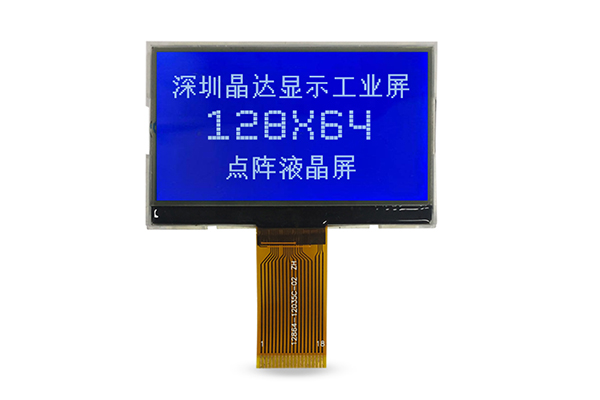
A graphic LCD display is a full-custom pixel-level display device composed of an orderly grid of independent pixel units arranged in fixed rows and columns. Each pixel on the screen is independently controlled by the driving circuit, which can be individually turned on or off without being restricted by fixed character or segment structures. Common resolution specifications include 128x32, 128×64, 192×64, 128x128, 240×128 and other standard models, covering small and medium-sized display size needs.
核心工作原理基於矩陣掃描驅動技術。顯示晶片控制行、列電路對像素點進行循環掃描,並根據輸入的顯示資料調整每個像素的開關狀態和灰階。
比較總結
|
範圍 |
段碼液晶螢幕 展示 |
圖形液晶顯示幕 |
| 結構 |
預定義段/電極 |
獨立可控制像素網格 |
| 內容彈性 |
已修復,僅限設計的字元/圖標 |
無限制、軟體定義 |
| 解決 |
低的 |
高,與像素相關 |
| 推動複雜性 |
簡單的 |
複雜的 |
| 可讀性 |
出色的對比度 |
廣角 因技術而異 |
參數段顯示圖形液晶顯示屏
結合上述效能、成本、功能上的差異,兩款顯示器在業界的應用場景完全不同。準確的選擇可以最大限度地提高產品性能並優化成本控制。
1.圖形點陣顯示器典型應用場景
Graphic dot matrix displays are suitable for products that require complex human-machine interaction, diversified display content, and functional iteration expansion. The core application scenarios include industrial control touch screens, intelligent testing instruments, medical detection equipment, POS payment terminals, handheld data collectors, and medium and high-end smart home devices. These scenarios need to display multi-line text, complex menus, data curves, and customized icons, and often need to upgrade display functions with product iteration, which exactly matches the flexible display advantages of dot matrix screens.
此外,在汽車車載輔助顯示、環境監測設備以及需要動態資料更新和圖形顯示的智慧終端設備中,圖形點陣顯示器也是主流選擇,可滿足產品視覺化和互動體驗的高要求。
2.段碼螢幕典型應用場景
Segment displays are mainly used in cost-sensitive, single display function, and fixed content display equipment. The typical scenarios include household appliances such as water heaters, induction cookers, air conditioners, and washing machines, as well as smart water meters, electric meters, gas meters, remote controls, electronic thermometers, and low-end portable measuring instruments. These products only need to display fixed numbers, simple state icons, and parameter values, without complex graphic interaction and function iteration, which can maximize the cost advantage and stability of segment screens.
同時,在追求低功耗、高耐用性的工業設備指示燈、電量偵測裝置、長期待機監控設備中,段碼顯示器也是業界首選的顯示方案。
如何選擇合適的單色液晶顯示器?
In short, the essential difference between graphic dot matrix displays and segment displays lies in display flexibility and structural scalability. Segment LCD displays rely on fixed segment structures, with low cost, low power consumption, high stability, and single functions, focusing on fixed digital and simple symbol display scenarios. Graphic dot matrix displays rely on independent pixel matrix control, with flexible and diverse display content, strong scalability, and slightly higher power cons