

如何區分LCD和LED?
在現代顯示產業中,液晶顯示器 and LED display are the two most dominant visual output technologies, widely deployed in consumer electronics, industrial control equipment, automotive instrumentation, commercial signage, and smart home devices. For procurement engineers, product designers, and industry purchasers worldwide, distinguishing between LCD and LED displays accurately is critical for optimizing product performance, controlling costs, and improving equipment stability. Many market users mistakenly regard LCD and LED as two completely independent display technologies with opposite working mechanisms.
基本定義和核心工作原理
1. LCD顯示器的基本機制
LCD是Liquid Crystal Display的缩写,是一种完全依靠外部光源呈现图像的被动显示技术。核心功能層液晶顯示器 is liquid crystal molecules sealed between two layers of polarized glass substrates. Liquid crystal molecules do not emit light spontaneously; instead, they adjust their arrangement and torsion angle under the action of driving voltage, precisely controlling the transmittance of backlight. By matching with color filter layers or light shielding layers, the display screen can present different grayscale, color, and text images.
2、LED顯示幕的技術屬性
LED stands for Light Emitting Diode.嚴格來說,市面上的商用LED顯示器分為主動式自發光LED螢幕和LED背光液晶屏兩大類,這是大多數用戶混淆的重點。日常對比場景中所指的所謂LED顯示屏,大多是傳統液晶顯示器的升級版,以LED燈珠取代液晶顯示器的CCFL背光作為新的背光源。
深入解析LCD與LED核心區別
1.背光系統及發光方式
The backlight system is the primary difference between traditional LCD display and LED display. Standard LCD industrial screens and early civil displays use CCFL backlights. This backlight mode relies on fluorescent gas discharge to generate uniform light, with the advantages of low cost and mature technology. However, it has obvious defects: high power consumption, slow startup response, short service life, and poor low-temperature resistance, which limits its application in high-end and extreme environment equipment.
2. 結構組成與集成
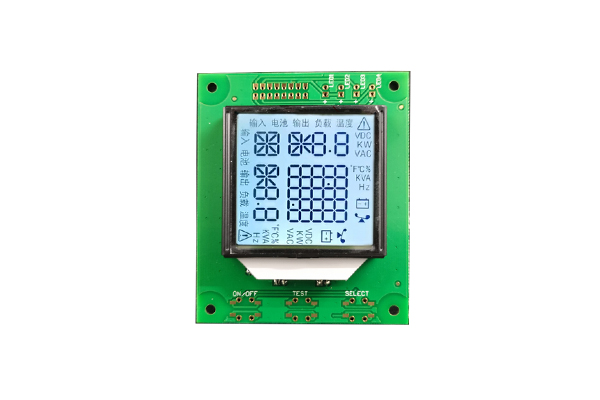
在工業顯示場景中,LCM模組是液晶顯示技術最常見的載體。LCM(液晶模組)是由LCD顯示面板、驅動IC、柔性電路板、背光組件和結構框架黏合而成的整合模組。它是一個完整的顯示單元,經過簡單的供電和訊號對接後,可以直接嵌入設備中。
Traditional LCD-based LCM module has a compact and standardized structure, with complete specifications ranging from 0.96-inch small screens to 15-inch industrial control screens. It supports customized resolution, viewing angle, and brightness, and is widely used in instrumentation, household appliances, and industrial automation equipment. In contrast, LED display modules are mostly assembled by discrete lamp beads and driving boards, with larger overall volume and higher integration difficulty in small-size scenarios.
3.顯示效果及影像表現
In terms of display performance, LED displays have obvious advantages in contrast, brightness, and color gamut. Traditional CCFL-backlit LCD display has low contrast, easy light leakage at the screen edge, and limited color restoration ability, so the picture is soft but lacks layering. LED-backlit displays can realize precise local dimming, effectively improving black field purity and picture contrast, with more vivid color rendering and higher screen brightness, adapting to strong light environments such as outdoor commercial displays and vehicle-mounted screens.
實際專案中如何選擇LCD或LED顯示屏
對於需要低功耗、長期穩定運作、低成本、色彩精度高的項目,液晶顯示器是首選解決方案。尤其是在工控儀表、便攜式電池設備、以及只需要文字和簡單圖形的低端顯示場景中,單色液晶顯示器搭配定制的LCM模組可以最大限度地提高性價比和設備穩定性。
對於戶外顯示、大尺寸拼接、高亮度防眩光、高對比、色彩鮮豔的顯示場景,LED顯示器更適合。例如,商業廣告螢幕、舞台顯示器、車載高亮度螢幕、高階消費顯示器等都可以充分發揮LED背光技術在視覺效果和環境適應性方面的優勢。